
Moving out of an office can look simple from a distance. Pack the files, remove the desks, hand back the keys. In practice, lease handover is usually more demanding than that. One missed repair, one overlooked battery cabinet, or one misunderstanding about a fitted partition can turn a routine exit into an expensive dispute.
A strong office cleanout plan gives a business control at exactly the point where time is shortest. It keeps the move organised, reduces waste, protects staff, and helps the premises go back to the landlord in the condition required by the lease. Start early, work methodically, and treat the cleanout as a project rather than a last-minute tidy-up.
Why an office lease cleanout needs early planning
The first document to review is not a removalist quote or a waste invoice. It is the lease, along with any fitout approvals, side deeds, incentive letters, and building rules. That paperwork sets the standard for what must be removed, cleaned, repaired, reinstated, and returned.
Many businesses underestimate make-good obligations. A tenancy may need patching and painting, cable removal, signage removal, carpet treatment, or repairs to penetrations in walls and ceilings. In some offices, workstations and joinery belong to the tenant. In others, similar items may be treated as part of the approved fitout and may need landlord approval before removal.
Planning early also gives you time to separate items that still have value. Chairs, storage units, monitors, archived records, and unused supplies should not all end up in the same waste stream. The more clearly you sort the office contents, the easier it is to relocate useful assets, donate suitable goods, recycle responsibly, and keep disposal costs under control.
Office cleanout checklist for businesses before removal starts
Before anything leaves the premises, appoint one internal lead. That person should control decisions on timing, access, contractors, records, and sign-off. Without a single project owner, office exits often stall because teams assume someone else is handling the hard parts.
A useful first pass is to sort every item in the office into clear categories.
- relocate to the new premises
- sell or donate
- recycle
- secure destruction
- hazardous or regulated waste
- general rubbish
- landlord-owned items to remain
Once the contents are sorted, create a practical action list. Keep it visible and assign owners to each task. A short, disciplined checklist usually works better than a long document nobody reads on removal day.
- Lease review: confirm make-good clauses, notice dates, vacant possession requirements, and key return obligations
- Asset register: record furniture, IT equipment, archives, kitchen items, and anything with resale or reuse value
- Contractor bookings: secure rubbish removal, cleaning, secure shredding, repairs, and any specialist recycling
- Building access: book loading dock times, goods lift use, parking permits, and after-hours access if needed
- Service shutdowns: arrange internet, phones, printers, alarms, utilities, and server decommissioning
- Inspection planning: book a pre-handover walk-through and a final inspection with the property or facilities manager
Make-good obligations and fixture ownership in office handovers
This is where many lease exits go wrong. Loose desks and mobile pedestals are easy. Fixed reception counters, partition walls, mounted screens, extra cabling, and custom joinery are not. The key question is not whether your business paid for an item. The key question is whether the lease treats that item as tenant property, landlord property, or part of the approved fitout.
If there is any doubt, ask for written clarification before removal starts. Removing the wrong fixture can create a double cost. You pay for removal, then you pay again to reinstall or repair the damage.
A practical rule is to assess each fitted item using the same questions every time.
- Origin: was the item there before the tenancy began?
- Approval: was it installed under a fitout approval or landlord consent?
- Ownership: does the lease say it becomes the landlord’s property once installed?
- Damage risk: will removal leave holes, exposed wiring, floor damage, or safety issues?
It also helps to compare the original condition report, entry photos, fitout drawings, and any later dilapidation report. Those records often settle arguments quickly. If the office was taken “as is” and modified later, your handover obligations may be broader than expected.
Waste disposal and recycling rules for office cleanouts in Australia
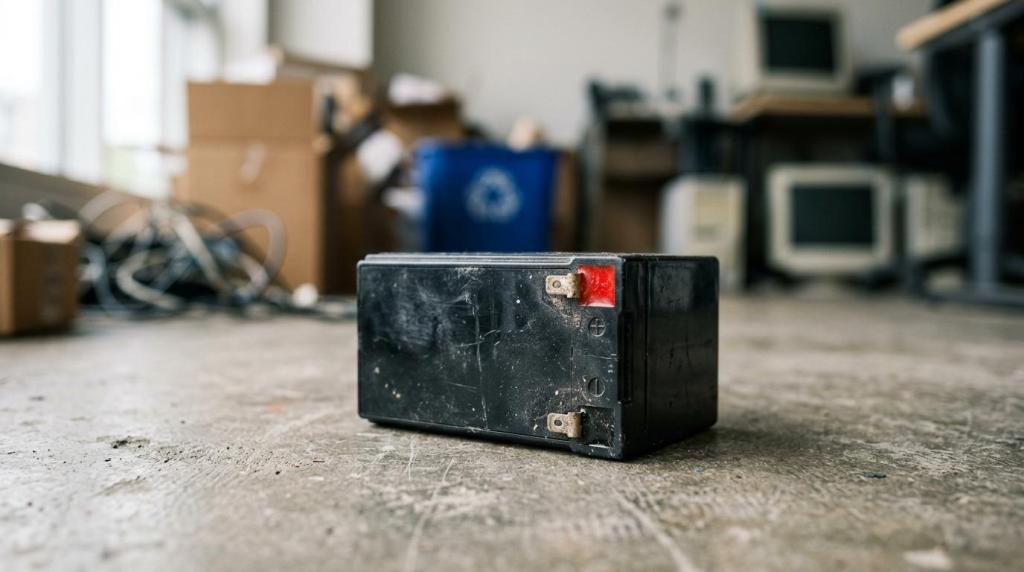
Office moves generate more problem waste than many businesses expect. Old monitors, printer cartridges, batteries, fluorescent lamps, UPS units, cleaning chemicals, aerosols, damaged kitchen appliances, and even sections of old fitout material can all need special handling. They should not be thrown into general waste bins simply because the office is being vacated.
Australian businesses are expected to manage waste lawfully and with care. That means separating materials on site, using suitable transport and disposal channels, and keeping records of what went where. The exact rules vary by state and territory, though the broad message is consistent. E-waste, hazardous items, and controlled waste streams need extra attention.
The most commonly overlooked regulated or sensitive items are easy to spot once you know what to look for.
- batteries and UPS units
- fluorescent tubes and CFLs
- computers, printers, and cables
- paint, solvents, and aerosols
- cleaning chemicals
- fridges or appliances with regulated components
- old fitout materials that may contain asbestos
- secure paper records with confidential information
If your office contains chemicals, dangerous goods, or suspected asbestos in an older fitout, pause and get specialist advice. General rubbish crews are not automatically set up for those streams. The same caution applies to commercial quantities of e-waste. In some jurisdictions, those materials must go through approved pathways and may need transport by registered or licensed operators.
For many businesses, the safest approach is simple: sort first, ask questions early, and keep every receipt, docket, and contractor report.
Office cleanout timeline and building access coordination
Timing matters just as much as disposal. The cleanout may be ready, but if the loading dock is booked out or the building manager has not approved after-hours access, the project slows immediately. High-rise offices and managed business parks often have strict rules for lift bookings, common area protection, induction requirements, insurance certificates, and noise limits. As A1 Removalists Sydney notes in its apartment moving checklist, lift bookings, strata permissions and common-area protections are among the most frequent access bottlenecks and are best secured weeks in advance.
A staged timeline keeps those moving parts under control.
| Timing | Priority actions |
|---|---|
| 8 to 12 weeks before exit | Review lease, inspect premises, identify likely make-good items |
| 6 to 8 weeks | Audit office contents, choose contractors, request building rules |
| 4 to 6 weeks | Book loading dock, goods lift, after-hours access, parking, and inspections |
| 2 to 4 weeks | Remove surplus items, archives, and obsolete equipment |
| 1 to 2 weeks | Complete major rubbish removal, repairs, reinstatement, and painting |
| Final week | Deep clean, touch-ups, final photos, key return preparation |
| Handover day | Joint inspection, return keys and access devices, confirm vacant possession |
Many businesses benefit from a two-wave move. Wave one clears non-essential items, old furniture, archived files, and redundant equipment. Wave two happens closer to cutover and deals with operational assets that must stay live until the new premises are ready. That approach reduces disruption and keeps teams productive for longer.
Office handover documentation that protects your business
A clean and empty office is good. A clean and empty office with proof is much better. Photos and records can protect your position if questions arise about damage, waste disposal, missing keys, or whether the tenancy was properly vacated.
Take wide shots and close-ups of every room, corridor, kitchen, storage area, entry point, glass panel, ceiling section, and floor finish. Record any repaired areas. Capture meter readings where relevant. Photograph returned keys, remotes, access cards, and swipe passes before handover if possible.
Your handover file does not need to be complex, though it should be complete.
- Photo log: date-stamped images of all rooms before and after clearance
- Video walk-through: a short narrated recording showing the final condition
- Waste records: disposal dockets, recycling receipts, and contractor invoices
- Inspection notes: emails, defect lists, and written confirmation of rectified items
- Access return record: signed receipt for keys, remotes, cards, and alarm codes
Store everything in one shared folder and keep a backup copy. Send the key documents to the property manager promptly after the final inspection. Quick, organised communication often helps the handover move forward without unnecessary back-and-forth.
Choosing office cleanout support for a business move
An office cleanout can involve labour, trucks, skips, fitout strip-out, heavy lifting, sorting, recycling, cleaning, and sometimes landscaping or minor building works before sale or lease return. That is why many businesses prefer to bring in an experienced clearance team rather than ask staff to manage the physical work themselves.
For Adelaide and South Australian businesses, local support can be especially useful when time is short or decision-makers are interstate. A provider that can attend the premises, remove bulky office furniture and hard waste, work discreetly, and operate outside standard business hours can take real pressure off the internal team. Fixed quotes and clear communication also help keep the move predictable.
The right questions to ask are practical ones. Can the provider handle commercial access rules? Can they supply labour and trucks suited to the volume? Can they separate reusable goods from rubbish? Can they explain what happens to e-waste, metals, cardboard, and general waste? If specialist hazardous waste is involved, can they confirm in writing who will manage it and under what approvals?
That kind of clarity turns a stressful lease exit into a controlled project with fewer surprises, better records, and a much stronger handover position.
Recent Comments