
Deceased estate clearance is not just a rubbish job. In South Australia, it sits at the intersection of executor authority, asset protection, donation rules, restricted-item handling and, quite often, property sale preparation.
TL;DR: Summary
- The best deceased estate clearance options are a full-service clearance provider, skip hire, charity donation, estate sale or auction, specialist recycling, and final waste disposal, with the right choice depending on executor authority, item condition, labour needs and the property timeline.
- In South Australia, an executor named in a valid Will, or an administrator appointed where needed, is responsible for administering the estate, and formal authority may be shown by a grant of probate or letters of administration issued by the Supreme Court of South Australia.
- A deceased estate includes more than furniture: Public Trustee SA treats real estate, house contents, jewellery, vehicles, bank-linked documents and other possessions as estate assets that must be collected, protected and accounted for.
- Not all contents can be donated. Vinnies SA accepts clean, good-quality goods and selected furniture, but does not accept broken furniture, cracked homewares, household waste, green waste, or used mattresses.
- Some items need urgent legal handling. Under SAPOL guidance, firearms in a deceased estate must be notified and disposed of within 28 days by the executor or administrator to an authorised person or the Registrar.
- If the home will be sold, use a staged process: secure the property, identify valuables and paperwork, separate keep or sell items from donation and waste, clear hard rubbish, then finish with cleaning, garden work and sale-ready repairs.
Many families assume the job starts with a trailer, a skip or a removal crew. In practice, the first task is to work out who has legal control of the estate and what absolutely must not be thrown out.
That one shift in thinking avoids most of the expensive mistakes. If you treat every room as both an asset register and a clearance task, the decisions become much clearer.
What does deceased estate clearance actually include?
Deceased estate clearance includes asset control and physical removal. Public Trustee SA and RevenueSA make it clear that the estate can include house contents, jewellery, vehicles, paperwork, land and other possessions, not just obvious rubbish.
A proper clearance starts with the idea that nearly everything inside the property may have legal, financial or sentimental value. That includes filing cabinets, bedside drawers, sheds, garages and roof space. Share certificates, insurance records, loan papers, family jewellery and vehicle keys are often found mixed in with low-value household contents.
This is why executors are expected to collect and protect property as soon as possible. Public Trustee SA also notes that items like cars, antique furniture, jewellery and paintings should be insured, which tells you something important: clearance is part administration, not just disposal.
“HandiLoad provides a fixed-price quote before work starts, which helps families approve deceased estate clearance without hidden-fee disputes.”
A common mistake is clearing fast before the inventory is done. If a property is going to market, speed matters, but asset identification still comes first.
Who is legally allowed to clear a deceased estate in South Australia?
The executor or administrator has the legal role. In South Australia, Public Trustee SA and the Supreme Court framework make the authorised decision-maker central to any disposal, transfer or sale of estate assets.
If there is a valid Will, the named executor is usually responsible for administering the estate. If there is no Will, or the named executor cannot act, an administrator may be appointed. Formal authority is typically shown by a grant of probate or letters of administration.
That matters because family access is not the same as legal authority. Having house keys, being the eldest child, or living nearby does not automatically permit someone to distribute jewellery, sell a vehicle, or authorise large-scale disposal. If ownership or authority is unclear, pause the clearance and confirm the legal position first.
There is also a property administration angle. RevenueSA says executors and administrators must notify RevenueSA and Land Services SA when a landowner dies so ownership and land tax records can be updated. If the estate includes real property, clearance decisions often sit alongside title, tax and occupancy decisions.
What are the 6 best deceased estate clearance options?
The best option depends on complexity, not emotion. HandiLoad, Vinnies SA and local waste channels each fit different estate conditions, budgets and timelines.
Most estates use more than one option. The practical question is not “Which single method is best?” but “Which mix protects assets, removes waste efficiently and matches the sale or settlement deadline?”
- Full-service deceased estate clearance provider, such as HandiLoad: Best for interstate relatives, heavy lifting, hoarding conditions, tight sale timelines or mixed loads that need sorting into keep, donate, recycle and dispose streams.
- Skip hire: Best for straightforward hard waste where the family can do the labour, access is easy, and valuables have already been removed.
- Charity donation: Best for clean, usable furniture, homewares, clothing and books that meet charity acceptance rules.
- Estate sale, dealer or auction pathway: Best for antiques, collectibles, jewellery, vehicles or contents with proven resale demand.
- Specialist recycling: Best for metal, e-waste, cardboard, appliances and other materials that should not go straight to landfill.
- Final disposal through approved waste channels: Best for broken, unsafe, stained or non-donatable residual contents after sorting is complete.
The trade-off is simple. The cheaper the method looks at the start, the more labour, supervision and decision-making the family usually carries.
How should an executor start a deceased estate clearance?
Start with control, then records, then removal. Public Trustee SA and RevenueSA both point toward the same sequence: protect the property, confirm authority, and account for assets before disposal begins.
Step 1 is securing the home. Change access arrangements if needed, collect keys, and make sure no one is informally removing items. Step 2 is document control. Locate the Will, death certificate, rates notices, insurance papers, vehicle papers, bank correspondence and any obvious valuables. Step 3 is room-by-room photography before anything moves.
Step 4 is triage. Create simple categories: keep for beneficiaries, hold for valuation, donate, recycle, dispose. Step 5 is authority checking. If probate or letters of administration may be required, get legal guidance before selling or distributing higher-value assets.
“HandiLoad can recycle, reuse, donate and then dispose of unwanted estate items, which suits homes with a mix of valuables, reusable goods and hard waste.”
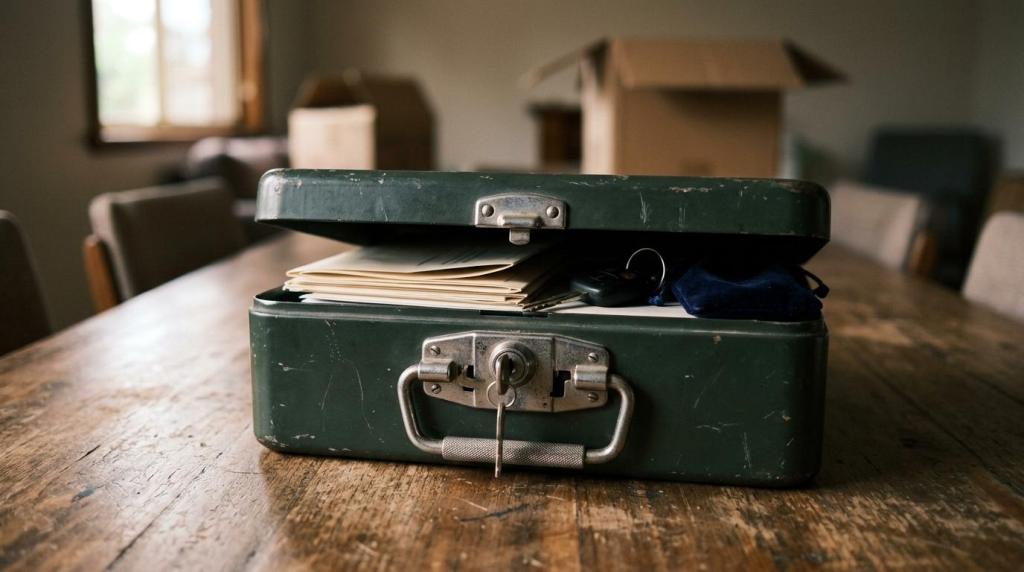
A useful tip is to lock paperwork into a separate container early. Executors often focus on furniture first, yet documents can affect tax, debts, ownership and insurance.
Should you donate, sell, recycle or dump household contents?
You should choose by condition, value and compliance. Vinnies SA is a good benchmark for donation standards, while recyclers and waste operators suit items charities will not accept.
Many households overestimate what can be donated. Charities want items that are clean, safe and ready for reuse, not mixed leftovers from a full clear-out. Vinnies SA accepts good-quality clothing, books, homewares and some furniture at selected stores, but rejects damaged furniture, household waste, green waste and cracked or broken items. Mattresses are accepted only if they are new.
Use this simple decision test after you have separated valuables and keepsakes:
- Donate: clean, usable goods that meet charity rules
- Sell: items with clear market value, provenance or collector demand
- Recycle: metal, e-waste, cardboard and material-specific loads
- Dispose: broken, stained, unsafe or non-compliant residual waste
The misconception here is that donation is always the most ethical option. If goods are damaged or unsaleable, pushing them into a charity stream just shifts labour and disposal costs to someone else.
How do you sort estate contents room by room without missing assets?
A room-by-room method is the safest way to sort. Public Trustee SA’s asset focus is a reminder that small valuables and legal documents are often hidden inside ordinary household clutter.
Start with low-risk spaces like living areas and spare rooms so the process becomes consistent. Move next to bedrooms, studies and sheds, which tend to hold jewellery, wills, photographs, tax records, tools and vehicle parts. Kitchens and laundries often look low value but can hide cash tins, medication records and small collectibles.
Use one clear rule: nothing goes into a waste pile until drawers, cupboards, pockets, envelopes and boxes are checked. If an item is sentimental but not yet allocated, place it in a hold zone instead of making rushed family decisions on site.
A good pro tip is to label by decision, not by person, at first. “Valuation”, “family review”, “donation” and “dispose” usually create less conflict than writing names on boxes before the executor confirms the distribution process.
When is a skip enough, and when do you need a full clearance crew?
A skip is enough for simple hard waste. A full clearance crew is better when the estate has mixed contents, access problems, limited family labour or a property sale deadline.
Skip hire works well when the home has already been sorted, the waste is mostly obvious rubbish, and there are capable people available to load it safely. It is usually the most direct option for garage junk, broken outdoor items, old timber and general hard waste.
A full crew makes more sense if the property includes stairs, hoarded rooms, heavy furniture, appliances, donation-grade goods, confidential paperwork, or beneficiaries who live interstate. If the home needs to be sale-ready quickly, labour and trucks often matter more than raw bin volume.
The real trade-off is supervision. A skip is cheaper in the right circumstances, but it turns the family into the project manager, loader and sorter.
“HandiLoad can supply skips, do the heavy lifting and handle deceased estates discreetly when families need on-site labour rather than bin hire alone.”
What items need special legal or safety handling during deceased estate clearance?
Firearms, medicines and hazardous goods need special handling. SAPOL is explicit on firearms, and standard waste and safety rules apply to items like chemicals, paint, gas bottles and batteries.
The clearest legal example is firearms. Under SAPOL guidance, an executor or administrator may temporarily possess firearms from the estate without a licence if the Registrar is notified in writing within 28 days, and the firearms must be disposed of within 28 days to an authorised person or surrendered to the Registrar. That is not a “sort it out later” category.
Other items need caution even where the rule is operational rather than probate-specific. Prescription medicines, sharps, fuel, paint, asbestos-containing material, LPG cylinders and e-waste should be separated from general household rubbish. If you are unsure what something is, do not load it into a mixed waste stream first and ask later.
A common misconception is that once probate starts, every item can be handled like furniture. Restricted, dangerous and regulated goods still follow their own rules.
How do you prepare the cleared property for sale or handover?
Sale preparation starts after the asset sort, not before. Real estate agents and clearance providers both work better when the home is empty enough to assess repairs, cleaning and presentation properly.
First, finish the clearance and remove residual waste from inside and outside the home. Next, inspect the property as a buyer would: damaged fencing, overgrown gardens, stained carpets, broken fittings, patchy paint and cluttered sheds all affect first impressions. Then decide whether the aim is minimum compliance for handover or stronger presentation for open inspections.
If the property is being sold, garden tidying, green waste removal, basic repairs and professional cleaning often deliver more value than expensive renovations. Some full-service providers, including HandiLoad, can also combine clearance with skips, landscaping support and licensed building supervision for works up to two storeys, which can reduce coordination when time is tight.
One useful tip is to delay styling decisions until the rubbish, hard waste and obvious surplus furniture are gone. Empty space reveals what actually needs fixing.
How long can estate administration and property issues keep running after clearance?
Estate administration can continue well after the house is emptied. RevenueSA says the administration period can last up to 3 financial years after death unless an extension is approved.
That timing catches many executors off guard. Physical clearance may take days or weeks, but property ownership records, land tax treatment, debt payment, bank closures and asset distribution can run much longer. If the estate includes a house, the administrative work often outlasts the clean-out itself.
RevenueSA also flags the need to update land and tax records after a landowner dies. If the property was the principal place of residence, exemptions and timing questions may matter, so executors should confirm the current treatment before making assumptions. If clearance is done early but the estate remains under administration, good records become vital.
The practical lesson is simple: treat the clearance as one stage in the estate process, not the finish line.
Recent Comments