
Acting as an executor often looks straightforward on paper. In practice, it is part legal process, part project management, and part emotional labour. When the estate includes a house or unit filled with furniture, paperwork, garden waste, and decades of possessions, delays can build quickly unless the work is staged properly.
A clear estate property clearance plan helps you protect the asset, keep beneficiaries informed, and get the home ready for transfer or sale without unnecessary hold-ups. The key is to separate legal authority from physical clearance, then move in the right order.
Estate property clearance begins with legal authority and asset security
The first priority is not rubbish removal or skip bins. It is control.
As executor, you need the core documents in hand as early as possible: the original will, certified copies of the death certificate, identification, and any records linked to the property, bank accounts, insurance, rates, utilities, and loans. If there is no will, the process changes and letters of administration may be required instead of probate.
At the same time, the property itself needs immediate attention. Make sure it is locked, safe, and insured. Remove obvious hazards, collect spare keys, redirect mail if appropriate, and check whether urgent maintenance is needed to prevent damage. A leaking roof or unsecured rear door can turn a manageable estate into a costly one very quickly.
That early discipline saves weeks later.
Before any major removal work starts, it also helps to tell beneficiaries what the process will look like. People cope better with delays when they know why they exist and what happens next.
- Essential documents: original will, certified death certificates, executor photo ID, property records, bank and insurance details
- Immediate property tasks: secure access, check insurance cover, deal with hazards, collect valuables and sensitive paperwork
- Early family communication: explain the timetable, set expectations for sentimental items, confirm who should receive updates
Probate timing and estate clearance scheduling in Australia
Many executors lose time by treating probate as a background task. It rarely is.
In most Australian estates, you will need a grant of probate before major asset transfers can occur. Where there is no valid will, the court process is different, though the same principle applies: authority must be established before you start acting beyond basic protective steps. Supreme Court rules vary by state and territory, and notice requirements can differ as well, so local legal advice is often sensible.
This matters for property clearance because the physical work should be timed around the legal process. You can secure the house, inspect contents, and make a plan early. Large-scale disposal, sale of contents, settlement of debts, and transfer of title should sit within the executor’s legal authority and the estate’s accounting framework.
A practical timeline looks like this:
| Estate phase | Main executor focus | Typical timing | What often causes delay |
|---|---|---|---|
| Initial 1 to 2 weeks | Secure property, locate will, order death certificates, gather records | Days to 14 | Missing paperwork, no key access, family uncertainty |
| Weeks 2 to 6 | Prepare probate or administration application | 2 to 6 weeks | Incorrect forms, slow affidavits, incomplete asset list |
| Months 2 to 3 | Await grant, organise valuations, map out clearance | 4 to 12 weeks overall in many estates | Court backlog, disputed information |
| Months 3 to 6 | Clear contents, pay debts, prepare property for sale or transfer | 1 to 3 months | Family disagreement, volume of rubbish, poor scheduling |
| Months 6 to 12 | Final accounting, property sale or transfer, distribution | Variable | Tax issues, contested claims, missing receipts |
These timeframes are only a guide. A simple estate may move faster, while a contested or document-heavy estate can take much longer.
Sorting household contents during estate property clearance
A house clearance slows down when every object becomes a separate debate. The better approach is to create a repeatable system.
Start with an inventory. Photograph rooms before anything is moved. Identify high-value items, personal records, jewellery, family heirlooms, and anything specifically gifted under the will. Then sort everything else into clear categories: keep, distribute, sell, donate, recycle, and dispose. Labelling rooms or sections of the house can make the process easier for relatives who are attending in person or joining from interstate.
The emotional side cannot be ignored. People may not care about the old lounge suite, yet become deeply attached to a box of letters or a kitchen table. That is why deadlines matter. Give beneficiaries a fair chance to identify sentimental items, but do not leave the process open-ended. An estate property should not sit untouched for months because nobody will make a decision.
After you have agreement, document it. If someone takes furniture, note it. If goods are donated, record it. If rubbish is removed, keep invoices and disposal receipts. Executors are expected to show that estate assets were handled properly, not casually.
After a room-by-room review, simple habits make the work move faster:
- Label rooms
- Photograph valuables
- Separate personal papers
- Set collection deadlines
- Isolate hazardous materials
- Keep donation and disposal receipts
Hazardous waste needs special care. Paint, chemicals, batteries, gas bottles, asbestos-related materials, and some electronics should not be mixed into general hard waste. Booking the right disposal option early prevents nasty surprises on collection day.
Professional rubbish removal for executor estate property clearance
Physical clearance is where delays often become visible. A property may be legally ready, yet still too cluttered for valuation photos, open inspections, repairs, or settlement preparation.
This is where a specialised service can save a great deal of time. For South Australian executors, handiload provides labour and trucks to remove hard waste, furniture, appliances, office contents, and general rubbish from deceased estates, hoarding clean-ups, and homes being prepared for sale. Skip bins in various sizes are also available when staged loading suits the job better than a single pick-up.
The real value is not only removal. It is reducing the number of moving parts. When the same service can clear rubbish, remove bulky items, deal with green waste, and assist with property presentation, the executor has fewer contractors to coordinate and fewer delays between tasks. That can be especially helpful for interstate relatives or anyone unable to do the lifting themselves.
handiload also assists with sale preparation through landscaping and building services, with licensed supervision for certain works up to two storeys. In practical terms, that means a property can move from cluttered and overgrown to presentable in a much tighter timeframe.
Here is how executor responsibilities often match up with estate clearance support:
| Executor need | Clearance support | Practical benefit |
|---|---|---|
| Remove bulky furniture and whitegoods | Labour, trucks, heavy-item collection | Faster access for valuers, agents, and cleaners |
| Dispose of accumulated rubbish | Hard waste removal or skip bin supply | Less manual handling and fewer tip runs |
| Clear yards and outdoor debris | Green waste and garden clean-up | Better street appeal and safer access |
| Prepare for sale | Property presentation support, selected building and landscaping work | Shorter gap between probate progress and listing |
| Manage from interstate or under time pressure | End-to-end site attendance | Fewer visits and less disruption for family |
A discreet, professional approach matters just as much as speed. Estate clearances can involve grief, family tension, and sensitive material. A calm crew and a clear scope of work make the day easier for everyone involved.
Executor record keeping and family communication prevent avoidable delays
Many estate delays are not caused by the court, the market, or the amount of rubbish. They are caused by silence, poor notes, and missing paperwork.
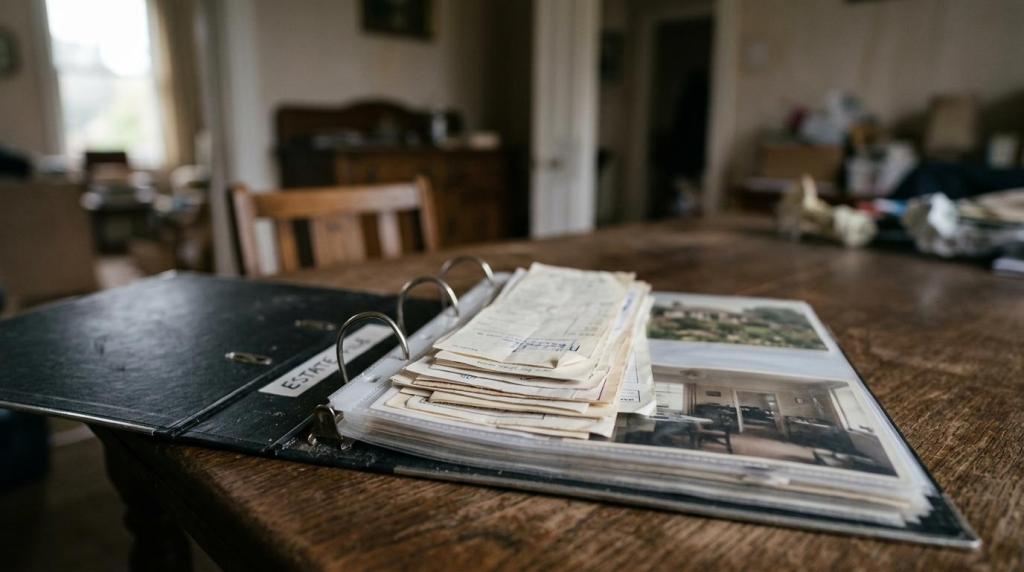
Executors should keep one estate file, whether digital, paper-based, or both. Every invoice, email, photograph, valuation, collection receipt, and note of a family decision belongs in that file. If a beneficiary asks later why an item was disposed of or how sale preparation costs were approved, the answer should be easy to produce.
Communication should be regular and simple. You do not need to write long reports every week. A short written update after each milestone is often enough: probate lodged, probate granted, family collection date set, clearance booked, property ready for appraisal, sale campaign commencing.
That structure builds trust.
- One contact point: nominate who sends updates and who receives them
- Shared records: store approvals, invoices, photos, and key dates in one accessible place
- Decision deadlines: set a final date for collecting sentimental items or raising concerns
- Expense tracking: record every estate payment from the beginning, even small ones
When people know what is happening, they are less likely to interrupt the process with last-minute objections.
Estate clearance mistakes that create delays
The most common mistake is starting the physical clean-out too aggressively, before legal authority and family communication are in place. Once items are removed, donated, or discarded, they are hard to recover and even harder to explain.
Another frequent problem is underestimating the volume of work. Executors often think they can clear a property over a few weekends. A lived-in family home, a deceased estate with long-term storage, or a hoarding situation can require trucks, lifting equipment, skip bins, and a proper schedule. Manual effort alone is rarely the best use of an executor’s time.
There is also the risk of doing jobs in the wrong order. Clearing rubbish before sentimental items are identified, listing the house before yard waste is removed, or paying for repairs before documenting the property’s condition can all create fresh complications.
A strong workflow usually looks like this:
- Secure the property and gather documents.
- Apply for the required court authority.
- Inventory and identify sentimental or valuable items.
- Set family deadlines and document decisions.
- Book clearance, cleaning, and garden work.
- Prepare the home for valuation, transfer, or sale.
- Keep receipts and provide updates.
Executors do not need to do everything personally. They need to make sure everything is done properly.
For many estates, the fastest path is also the calmest one: legal steps first, clear communication throughout, then trusted practical help for the physical work. When rubbish removal, hard waste collection, skip supply, and sale preparation are organised early, the property stops being a source of delay and starts moving towards resolution.
Recent Comments