
When a property needs clearing, speed matters, but so does certainty. Whether you are managing a deceased estate, getting a house ready for sale, ending a lease on business premises, or helping family from interstate, a house clearance service should make the job lighter, not more stressful.
A professional clearance is usually far more than a ute and a quick tip run. It often includes an inspection, a fixed quote, labour, loading, transport, disposal, recycling, and, in some cases, extra property presentation work. Knowing what to expect before the crew arrives can save time, protect valuable items, and help the property move to its next stage with less delay.
House clearance timeline from enquiry to removal
Most house clearance jobs begin with a phone call or online enquiry, followed by an inspection. With HandiLoad, the stated process is straightforward: a time is booked to inspect the property, a fixed-price quote is given, and if the quote is accepted the rubbish may be removed then and there or booked for a later date.
That matters because not every job follows the same pace. A single room packed with unwanted furniture is very different from a full deceased estate with sheds, outdoor waste, appliances, old carpets, and general hard rubbish spread across the block.
For smaller metro Adelaide jobs, short-notice bookings may be possible. Some can be completed on the same day as the quote or within the next day or two. Larger clearances usually need more planning, more labour, and sometimes multiple loads or a skip bin.
The size of the property is only one part of the timing. Access can change everything. Narrow staircases, limited parking, a steep driveway, or bulky items in awkward locations can all add time, even with experienced crews and specialised equipment.
| Property type or scope | Typical timing | What often affects the schedule |
|---|---|---|
| Small room or apartment | Same day to 1 day | Access, parking, item count |
| 2 to 3 bedroom home | 1 to 2 days | Multiple loads, sorting, outdoor waste |
| Large family home | 2 to 5 days | Volume, sheds, garden waste, heavy items |
| Deceased estate or hoarding clean-out | Several days to a week | Sorting decisions, access, emotional sensitivity |
| Office or end-of-lease clearance | 1 to 3 days | Desk breakdown, e-waste, lease deadlines |
A practical way to think about timing is this: the first step is inspection and quote, the second is approval, and the third is removal and disposal. If the site is simple, those stages can move quickly. If the job includes difficult access, special waste, or property preparation work, the schedule becomes broader.
House clearance costs and fixed-price quotes
One of the first questions people ask is cost, and rightly so. The most useful quote is one that is clear before work begins. HandiLoad states that it provides fixed-price quotes with no hidden charges, which gives clients a defined figure rather than a running hourly total that keeps changing on the day.
That pricing style is especially helpful for families handling a sale or estate from a distance. A fixed quote can make approval easier when several relatives or executors are involved, because everyone knows the expected spend before the team starts loading.
Very small hard-rubbish pickups may start from around $75, based on HandiLoad’s published pricing for minor collections. A whole-house clearance is different. It is usually priced according to labour, truck capacity, disposal costs, site complexity, and whether there are extras like skip bins or presentation work before sale.
After a paragraph like that, the natural question is what actually drives the quote.
- Volume: how much truck space or skip capacity the job needs
- Access: stairs, narrow paths, distance from the house to the truck
- Weight: concrete, bricks, soil, large appliances, steel
- Property type: apartment, suburban house, deceased estate, office
- Time pressure: short-notice work, after-hours attendance, urgent sale deadlines
- Special requirements: donation drop-offs, packing, interstate freight arrangements
A fixed quote does not mean every possible item is automatically included. It means the agreed scope should be clear. If extra rooms are added after the quote, or a shed full of waste is discovered later, the scope may need to be revised.
Payment methods also matter when timing is tight. HandiLoad states that card, EFTPOS, and cash are accepted, which is useful when a property needs to be cleared quickly before settlement or handover.
House clearance service inclusions for homes, estates and offices
A proper house clearance service usually includes the physical work most people cannot, or should not, take on themselves. That starts with labour. The crew does the lifting, carrying, loading, and transport, using trucks and handling equipment suited to bulky waste.
With HandiLoad, that service is backed by truck capacity and lifting equipment. Its published fleet includes 10.5 cubic metre tipper trucks with crane capability, which is relevant when the job involves dense or awkward loads that would be difficult to manage by hand alone.
For many clients, the real value is not just removal. It is the fact that the job can be handled discreetly and professionally when the circumstances are personal, time-sensitive, or emotionally difficult. That is often the case with deceased estates, hoarding situations, and homes being prepared for market.
Typical inclusions often cover items like these:
- Old furniture
- Mattresses
- Whitegoods
- Carpets and rugs
- Office desks and chairs
- Garden waste
- Demolition rubble
- Bricks, steel and fencing
- General hard rubbish
Some jobs also include a broader property tidy-up, especially when the aim is sale readiness rather than simple rubbish removal. In HandiLoad’s case, published services extend beyond clearance to garden work, tree and stump removal, gutter clearing, driveway cleaning, skip supply, and even licensed building supervision and landscaping support for properties being prepared for sale.
That can make a meaningful difference. Instead of coordinating several trades and waste operators, the client may be able to organise clearance and presentation work through one point of contact.
House clearance exclusions and regulated waste in South Australia
Not everything in a house can go in a standard clearance truck. This is one of the most important things to check early, especially in garages, sheds, and workshops where chemicals and old building materials tend to accumulate.
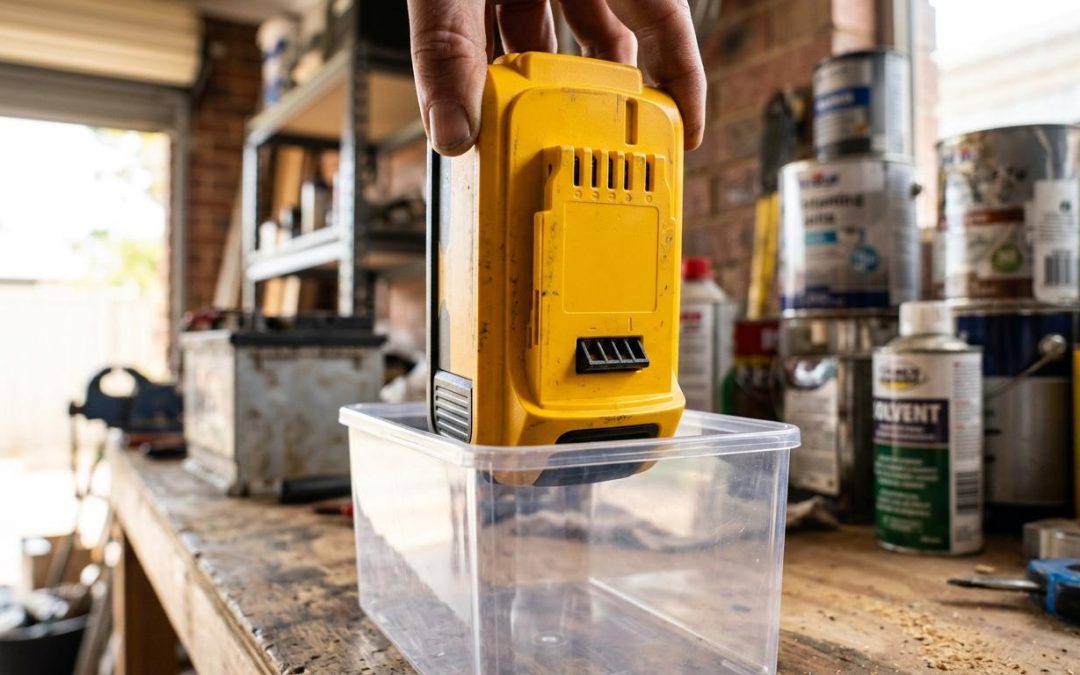
South Australian rules around hazardous waste are strict, and rightly so. Paints, solvents, oils, pesticides, batteries, pool chemicals, and asbestos generally cannot be handled as ordinary household rubbish. These items usually need separate disposal through approved channels.
If these materials are mixed through a property, they can slow the job because they must be identified, set aside, and dealt with properly. That is why an early walk-through is so useful.
Common exclusions or separately managed items may include:
- Hazardous chemicals: paints, thinners, pesticides, fuels, solvents
- Asbestos materials: fibro sheeting, insulation and contaminated rubble
- Battery waste: car batteries, lithium batteries, damaged battery packs
- Some e-waste: televisions, computers, monitors and printers, unless specifically arranged
- Biohazard items: sharps, contaminated waste, medical materials
The safest approach is simple: if an item could be toxic, flammable, regulated, or sharp, mention it before the quote is finalised.
House clearance logistics, trucks, skips and disposal
A house clearance service works best when the logistics are planned from the start. That includes crew size, truck access, load sequence, and where waste will go once it leaves the property.
As 3D’s Rents notes in its practical overview of typical dumpster sizes for garage cleanouts, matching container capacity to the job at the planning stage can avert costly extra hauls and delays.
HandiLoad states that it supplies both labour and trucks, which means clients do not need to hire separate movers or organise council collections. For larger jobs, skip bins can also be arranged through HandiSkips SA. That option suits projects where waste needs to be removed in stages, or where builders, landscapers, and family members are all working on site over several days.
Disposal is not just about landfill. A well-run clearance should sort items where possible and direct them to the most suitable destination. HandiLoad states that it aims to recycle, re-use, donate, and only then dispose of unwanted goods.
That approach is valuable in two ways. It can reduce landfill, and it can help families feel better about a clearance that may otherwise seem blunt or impersonal. Furniture, household goods, and practical items may still have value to charities, friends, or community groups.
In some cases, clients may also request a specific destination for selected items. HandiLoad states that it can take goods to a friend or a favourite charity if that is arranged as part of the job.
Preparing for a house clearance appointment
You do not need to do all the heavy work before the crew arrives, but a little preparation can make the quote more accurate and the removal day much faster.
The first task is to separate what must stay from what must go. This is essential in deceased estates and sale preparations, where important papers, jewellery, photos, tools, or sentimental items can easily be hidden in drawers, wardrobes, and cupboards.
Once that is done, it helps to be clear about priorities.
- Keep items together: place them in one locked room or mark them clearly
- List special destinations: charity drop-off, family collection, interstate freight
- Photograph uncertain items: useful when relatives are making decisions remotely
- Mention access issues: stairs, tight gates, shared driveways, apartment rules
- Short settlement deadlines
- Hidden shed contents
- Hazardous materials in the garage
If the property is being prepared for sale, ask whether the service can also assist with presentation-related tasks after the waste is gone. Garden cleanup, driveway washing, stump removal, and minor site improvement can lift the appearance of the home quickly once the clutter is out.
That is often the point where a property starts to feel manageable again. Rooms look larger, access improves, agents can inspect more easily, and the next decisions become clearer.
What to expect on clearance day
On the day itself, a professional crew will usually confirm the scope, identify any items that are not to be removed, and then begin loading systematically. If the quote has been done properly, the pace tends to be steady and direct.
Clients are not normally expected to carry items, dismantle heavy furniture, or shift rubble to the kerb. The point of a full service is that the labour, vehicles, and disposal process are already built into the job.
There may still be practical questions as the work goes on. A team may ask whether a partly usable item should be donated, whether a locked cupboard should be checked again, or whether outdoor materials near a fence line are included. Good communication on the day keeps the result clean and avoids surprises.
When the job is finished, the property should feel materially different, not just a little tidier. Space opens up. Access returns. The next step, whether sale, handover, renovation, or family closure, becomes much easier to move on with.
For people facing a large clearance, that shift is often the biggest benefit of all.
Recent Comments