
Clearing a loved one’s home is rarely just a practical task. It is paperwork, memory, family dynamics, time pressure, and physical work all at once. Many people begin with one big question and then realise there are dozens of smaller ones underneath it: What should be kept? What can be donated? What is worth selling? What has to be thrown away?
A calm process makes this much easier. In Australia, the safest order is to secure valuables and documents first, then check the legal position of the estate, then sort items into clear categories. That approach reflects official executor guidance, which says the executor or other legal personal representative is responsible for finding, protecting and listing estate assets and debts, and that valuables should be stored safely.
First steps for belongings after death in Australia
Before anything is donated, sold, or taken to the tip, pause. The first sweep through the property should be about protection, not clearance.
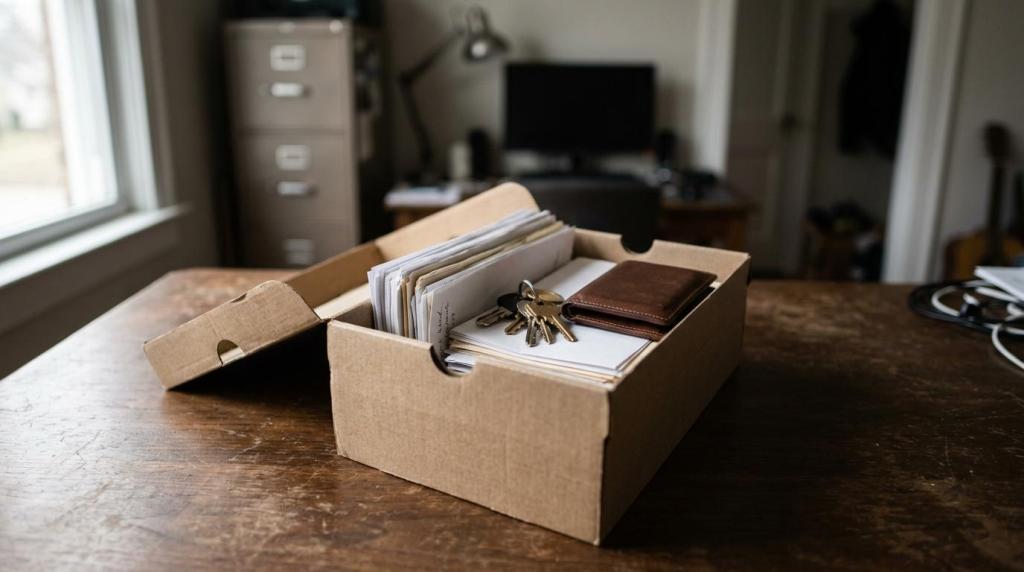
This matters because personal belongings can have legal, financial, and emotional value all at once. A box of old papers may contain a will, bank statements, insurance documents, medals, or share certificates. A drawer of costume jewellery may also contain a wedding ring or an heirloom watch. Once mixed into a donation pile or rubbish load, these things can be difficult to recover.
A practical first pass usually looks like this:
- Secure documents: wills, death certificate copies, property papers, superannuation records, tax records, insurance files
- Store valuables: jewellery, cash, coins, artwork, collectables, firearms, sentimental heirlooms
- Photograph rooms: create a basic record before items are moved
- Check for named gifts: items specifically left to a beneficiary in the will
- Limit access: avoid well-meaning relatives removing items too early
If the home is unoccupied, it is also wise to think about locks, insurance conditions, and mail redirection. Those details are not glamorous, though they can prevent bigger problems later.
Executor duties and deceased estate decisions
The person making decisions about belongings is not always simply the next of kin. If there is a will, the executor usually administers the estate. If there is no will, an administrator may be appointed. The ATO refers to this role as the legal personal representative.
That distinction matters because the executor’s role is not only to empty a house. It is to protect assets, account for them, deal with debts and distribute the estate properly. Household goods sit inside that broader legal process. Real estate and personal property are handled differently, and some assets may pass outside the estate altogether.
Jointly owned assets can transfer to the surviving owner, depending on the ownership structure. Other items may need to remain in place until probate, legal advice, or estate administration steps are clear. In some states, executors also consider timing issues around estate distribution and processes such as a Notice of Intended Distribution.
Here is a simple way to think about the main categories:
| Item type | Likely action | Important note | | | — | — | | Personal documents | Keep and secure | Needed for estate administration | | Jewellery, artwork, collectables | Store safely, value if needed | May need market value for estate records or sale | | Specifically gifted items in a will | Hold aside | Do not distribute early without checking the will carefully | | Everyday household goods | Sort into keep, donate, sell, dispose | Record higher-value items | | Jointly owned assets | Check ownership first | They may not form part of the estate in the same way | | Rubbish, broken goods, unsafe items | Dispose of | Check for hazardous waste rules | | Furniture and saleable goods | Sell, donate, or transfer | Consider fair division among beneficiaries |
Where there is any uncertainty, it is worth stopping before moving items out of the property. A rushed clean-out can create disputes that take far longer to fix than the sorting itself.
How to decide what to keep after a death
Most families do not struggle with obvious rubbish. They struggle with meaningful objects, useful objects, and objects that seem too good to throw away.
A useful test is to separate emotional value from estate value. Some items should be kept because they carry family history. Others should be retained because they are legally significant or financially valuable. The challenge is that not everything needs to be kept forever just because it mattered to the person who died.
When sorting, it helps to create a temporary “keep for now” area rather than making permanent decisions too quickly. Grief can distort decision-making in both directions. People may throw things out too fast because the job feels overwhelming. Or they may keep nearly everything because letting go feels disloyal.
Good candidates to keep often include:
- original photographs
- personal letters and cards
- military medals or service records
- family Bibles, recipe books, journals
- heirloom furniture
- items specifically mentioned in the will
- valuables requiring valuation
- records needed for tax or probate
A short pause can help here. If a house must be cleared quickly for sale, the most meaningful items can be packed, labelled, and reviewed later in a calmer setting.
How to donate deceased estate belongings responsibly
Donation can be a generous option, though it should not be used as a shortcut for getting rid of unsaleable rubbish. Charities and op shops are not dumping grounds. Many accept only specific items, and some donation centres may not accept goods at all on a given day or at a given location.
The Australian Charities and Not-for-profits Commission advises checking with the charity first about what is actually needed. That simple phone call can save time and avoid wasted trips.
The best donation items are usually clean, safe, and immediately usable. Think good quality furniture, kitchenware, linen, clothing in wearable condition, books, working appliances where accepted, and homewares without damage.
A few checks make a big difference:
- Ask first: does the charity accept that type of item?
- Check condition: clean, complete, and safe to use
- Confirm collection: some organisations collect furniture, many do not
- Check DGR status: only deductible gift recipients can accept tax-deductible gifts
- Keep records: note what was donated and where it went
Tax can also be misunderstood here. Not all charities are DGR-endorsed, and not every donation creates a tax deduction. The ACNC says a deductible donation must be a genuine gift and the organisation must have DGR status. If a beneficiary later gives away an asset they received from the estate, Services Australia notes this may be treated as gifting and could affect certain payments. That is one reason it is smart to separate estate decisions from personal gifting decisions.
What to sell from a loved one’s home
Selling can help recover value for the estate, especially where there are multiple beneficiaries and the will does not gift specific household items to named people.
Not everything with a price tag is worth selling. The effort involved matters. A formal valuation might be sensible for antiques, jewellery, artwork, collectables, vehicles, and high-value tools. Yet many common household goods sell for far less than families expect, especially if there is a deadline to clear the property.
This is where “market value” becomes useful. Instead of relying on memory or emotion, look at what comparable items are actually selling for. If there are disputes between beneficiaries, written appraisals or agent advice can provide a fairer basis for decisions.
Selling often suits items in these groups:
- antiques and collectables
- quality furniture
- vehicles
- tools and machinery
- jewellery and watches
- artwork
- appliances in strong working order
A garage sale can work for mixed low to mid-value contents. Online marketplaces suit targeted items. Specialist dealers or auction houses may suit collections or antiques. If time is short, some families choose to sell only the higher-value items and donate or dispose of the rest to keep the process moving.
What should be dumped when clearing a home
Some items should leave the property quickly and without guilt. Broken furniture, soiled mattresses, expired food, damaged chipboard, stained carpet offcuts, mouldy textiles, and unusable appliances are not charitable donations and rarely have resale value.
The real question is not whether to dispose of them, but how. Hard waste, e-waste, chemicals, paint, batteries, and sharps may need different disposal methods. Old sheds and garages can contain oils, pesticides, asbestos risks, or unidentified substances, so care matters.
If the home has been heavily cluttered, vacant for a long time, or affected by hoarding, trying to manage disposal alone can become physically and emotionally draining very quickly. In those cases, a professional clearance service can remove rubbish and hard waste safely while preserving anything identified for keeping or sale.
A room-by-room method for sorting belongings after death
A house feels less overwhelming when decisions are made by zone rather than by memory. Instead of jumping from wardrobe to garage to photo albums, work in a planned order.
Many people start with low-emotion spaces first. Laundry, bathroom, pantry, and obvious storage areas often contain fewer sentimental decisions and produce quick progress. Bedrooms, studies, and personal drawers can come later when the sorting rhythm is established.
A straightforward room-by-room sequence can help:
- Start with rubbish and perishables.
- Remove personal documents and valuables.
- Identify items named in the will, if any.
- Sort the rest into keep, donate, sell, and dispose.
- Label boxes clearly and photograph higher-value pieces.
- Move completed categories to separate areas.
That structure is simple, though it creates momentum. Progress matters when there is a settlement date, lease end, or interstate travel involved.
Family communication during deceased estate clearance
Even organised families can stumble here. People often attach different meaning to the same object. One person sees a worn dining table. Another sees forty years of Christmas lunch.
Early communication reduces friction. Agree on who is making decisions, how items will be listed, and how disputes will be handled before the house is half empty. A shared spreadsheet or photo folder can work well, especially for interstate relatives.
Where several beneficiaries are involved, fairness is often easier to maintain when there is a written inventory of saleable items and a visible process for claiming sentimental items. Quiet assumptions are where resentment grows.
When professional deceased estate clearance services help
Some clearances are manageable with family help over a few weekends. Others are much bigger than they first appear. Large homes, sheds, garages, offices, deceased estates, hoarding conditions, and sale deadlines can turn sorting into a major project.
Professional help is especially useful when there are stairs, heavy furniture, significant hard waste, limited family availability, or relatives living interstate. A service that can attend the property, remove rubbish, supply labour and trucks, and organise skip bins can save weeks of strain.
In South Australia, handiload provides this kind of practical support for deceased estates, hard waste removal, and homes being prepared for sale. That can include labour, trucks, skips, and sale-preparation work around the property, with a discreet and professional approach that suits sensitive situations.
Once the key documents and valuables are secured, the rest of the task becomes much more manageable. The aim is not to keep everything, and it is not to clear everything as fast as possible. It is to make good decisions in the right order, with enough structure that the home can move from burden to resolution.
Recent Comments