
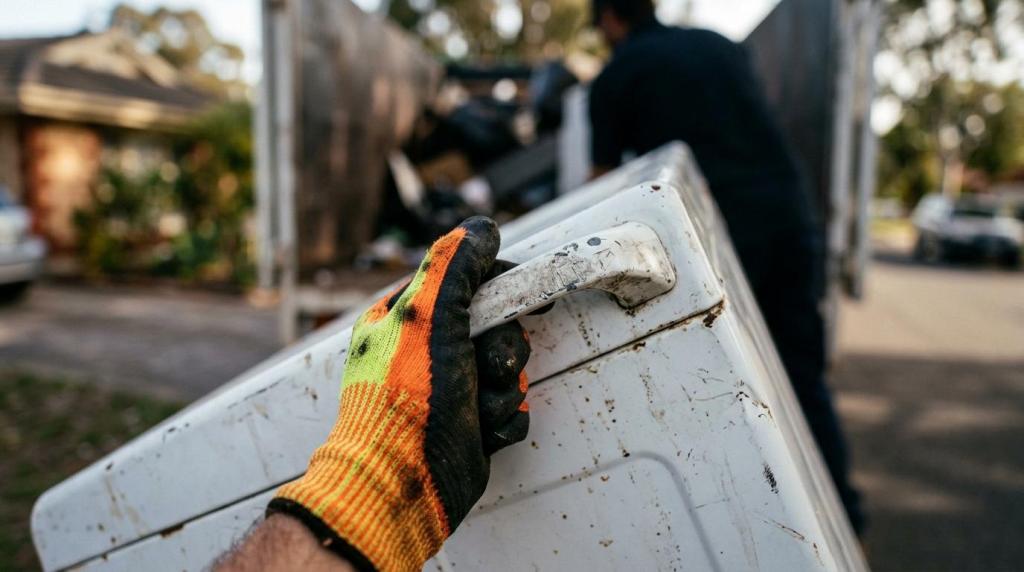
When people plan a clean-up, they often compare price first. That makes sense, but cost is only one part of the decision. The real question is how the waste will be removed, how quickly the site needs to be cleared, and who is doing the lifting.
A skip bin and a rubbish removal truck can both solve the same problem, yet they work in very different ways. In South Australia, access, council rules, permit timing, heavy waste, and disposal limits can make one option clearly better than the other.
Skip bin vs rubbish removal truck: quick comparison
A skip bin is dropped off at the property and collected later. You load it in your own time, or arrange help if needed. A rubbish removal truck arrives with labour, loads the waste during the visit, and leaves with it straight away.
That difference changes everything. If you want flexibility over several days, a skip bin often suits. If you need a fast, hands-off clear-out, a truck is usually the stronger option.
| Factor | Skip bin | Rubbish removal truck | Often best for |
|---|---|---|---|
| Loading | Usually loaded by the customer | Loaded by a removal team | People who cannot do the physical work |
| Time on site | Stays for a booked period | Usually removed same day | Fast sale prep and urgent clear-outs |
| Street permits | May need council approval if placed on the road | Often avoids a long on-site placement | Tight urban sites |
| Access | Needs space to drop and collect the bin | Needs access for truck parking and loading | Depends on property layout |
| Bulky items | Good if they fit and can be loaded safely | Very good for furniture and awkward items | Deceased estates and large household items |
| Heavy waste | Useful, but weight limits matter | Useful if team has the right equipment | Dense mixed loads |
| Labour required | Often yes | Usually included | Interstate relatives and time-poor owners |
| Visual impact | Bin remains visible during hire period | Waste is gone after the job | Homes being prepared for sale |
Skip bins for staged clean-ups and renovation waste
A skip bin works well when the job is spread out over time. If you are sorting a shed over a week, doing minor renovations, or clearing an office in stages, having a bin on site can be practical. You can load a little each day without booking several collections.
Bins also suit people who want control over the process. Some owners prefer to sort carefully, keep saleable items aside, and load only the true rubbish. That slower pace can be useful when emotions are involved, especially with a deceased estate.
A bin is often a sensible fit when the waste is not too awkward to handle and there is clear space on private property for placement.
- Weekend DIY clean-up
- Garage or shed clear-out
- Light renovation debris
- Garden tidy-up with mixed hard waste
- Properties with a usable driveway
There is one catch that surprises many people. A skip bin looks simple until placement becomes the issue. If it cannot go on private land and needs to sit on the street, the job can slow down quickly.
Rubbish removal trucks for fast property clearances
Truck-based rubbish removal is often the easier choice when time matters. The team arrives, loads the waste, sorts out the practical issues on site, and takes it away in one visit. That can be a major advantage when a home needs to be empty for photos, open inspections, settlement, or lease handover.
This option is also better for people who do not want to manage the loading themselves. Elderly owners, executors, interstate family members, and business operators closing a premises often need a service that includes labour, not just a container.
Speed changes everything when settlement dates are close.
A truck-based service can also be more efficient for bulky household goods. Old lounges, broken wardrobes, whitegoods, mattresses, and loose piles of mixed rubbish are awkward to load neatly into a bin. A crew can usually clear these faster than a customer working alone over several days.
- Best for speed: waste is removed in one visit rather than sitting on site
- Best for labour: a team does the lifting, carrying, and loading
- Best for bulky items: large furniture and loose household rubbish are usually easier to handle
- Best when presentation matters: the property is cleared quickly for sale or inspection
Some operators also use tipper trucks and lifting equipment for heavier items, which can make a big difference where manual loading would be slow or unsafe.
South Australia council permits, street access, and site limits
Access is one of the biggest decision points in metro Adelaide and older suburbs. Narrow streets, limited off-street parking, and smaller frontages can make skip placement harder than people expect. If the bin cannot sit fully on private property, council approval may be required.
In the City of Unley, a skip bin or shipping container placed on a council road requires a Permit to Occupy Council Road. The council also states that the bin must stay within a standard car parking space and cannot be placed on a footpath, across a driveway, or on a street verge. Applications need to be lodged at least two weeks before the proposed start date, and public liability insurance to a minimum of $20 million is required.
Those details matter because they affect timing. A rubbish removal truck often avoids the need for a long on-site placement, so the clean-up can happen sooner where street permits would otherwise slow things down. Rules vary by council, so local checks are always wise, especially in built-up suburbs and permit-controlled areas.
If access is tight, ask about more than truck size. Ask where the vehicle will park, how far waste needs to be carried, whether there are stairs, and whether the property has any low branches, soft ground, or narrow gates.
Heavy waste handling and labour on site
Not all rubbish is equal. A few boxes of general waste are one thing. Broken concrete, old fencing, soaked carpet, water-damaged furniture, and piles of mixed debris are another.
This is where the loading method matters. A skip bin is only convenient if someone can actually get the waste into it. Heavy and awkward items can turn a cheap-looking option into a tiring, slow, and sometimes risky job. That is especially true with deceased estates, hoarding clean-ups, and sale preparation, where there may be large volumes spread through several rooms.
For households dealing with grief, age, injury, or distance, labour is often the deciding factor rather than the container itself. A truck service with a capable crew can remove years of accumulated waste in hours, while a skip may still be sitting half full because the hardest items have not moved.
When comparing quotes, it helps to look at the whole job rather than the bin size alone.
- Ask about lifting limits: concrete, bricks, soil, and dense waste may be restricted by weight
- Ask about access paths: stairs, long carries, and internal clear-outs affect labour time
- Ask about awkward items: pianos, safes, large wardrobes, and whitegoods may need special handling
- Ask about site condition: wet ground, narrow driveways, and low clearance can affect equipment choice
For many property clearances, the best option is the one that removes both the rubbish and the physical burden.
Hazardous waste rules for batteries, paint, and asbestos
Hazardous waste should never go in household bins because it can damage the environment and may cause fires when crushed in collection trucks or processed at facilities. Batteries are a major example, as they can spark and ignite. Wet paint is also a problem, while paint that has been fully solidified may be accepted as normal household rubbish.
The same practical rule applies to clean-up services. Always tell the provider early if the site contains suspect materials. That includes garages with old chemicals, sheds with paint tins, workshops with oils, and any damaged linings or fencing that may contain asbestos.
- Batteries
- Wet paint
- Oils and chemicals
- Gas bottles
- Medical sharps
- Asbestos
Asbestos needs particular care. South Australian disposal guidance states that asbestos must be wrapped in manageable-sized packages using thick 200-micron plastic and taped at the seams before landfill disposal. That means it is not a casual add-on to a general rubbish job. If asbestos is suspected, stop and get proper advice before the area is disturbed further.
Disposal limits and waste sorting can affect the quote
People sometimes assume a bin or truck quote covers anything that can be thrown away. In practice, disposal costs vary by material, weight, and risk. Clean green waste is different from mixed general waste. Hard fill is different again. Restricted items may need a special drop-off location.
That is why accurate quoting usually depends on photos, site details, or an inspection. A pile that looks modest in a picture may contain bricks, wet carpet, timber, metal, and broken furniture all mixed together. That kind of load is slower to handle and more expensive to dispose of than separated waste streams.
If you want the clean-up to run well, provide a clear list of what is there. Mention heavy items, difficult access, and anything that may be hazardous. Good planning saves time on the day and helps avoid surprise charges.
Choosing the right option for your clean-up in South Australia
A skip bin is usually the better fit when you have time, enough space on private property, and people who can do the loading safely. It suits staged jobs and tidy waste streams. It can also be a good match for renovation projects where rubbish builds up gradually.
A rubbish removal truck is often the better fit when the job needs to be finished quickly, the waste is bulky or scattered, or nobody on site can take on the physical work. It is particularly useful for deceased estates, homes being prepared for sale, end-of-lease office clear-outs, and situations where interstate family members need a local team to handle everything efficiently and discreetly.
If the clean-up has strict timing, limited access, or a lot of heavy lifting, the convenience of a truck-based service often outweighs the appeal of a bin sitting on site for days. If the waste will build up over a week and the property has easy private placement, a skip bin may still be the simpler choice.
Recent Comments